Core Banking System: How It Works, Features, Benefits, and Modern Solutions

Date:
19.05.2026
What is a Core Banking System
A core banking system is an all-in-one platform that helps a company manage accounts, transactions, fees, invoices, assets, and other financial operations in a fully controlled environment. Although the term is often associated with financial institutions, modern core banking solutions are not limited to traditional banks. They are widely used by fintech companies, brokers, investment businesses, digital finance products, and other organizations that need to centralize financial activity.
In simple terms, this core system is the operational backbone of financial infrastructure. It connects key money-related processes and keeps them consistent across users, projects, desks, and client portfolios.
For a company, this means fewer disconnected tools and more control over financial data. Banking services and financial operations become easier to manage, monitor, scale, and connect with other business systems.
Key Functions of a Core Banking System
The key functions of core banking software are built around account control, cash movement, transaction logic, and financial recordkeeping. For example, Wifox Business Core Solution provides a configurable environment where financial activity stays accurate, traceable, and easier to manage.
Account management. The system stores account details, tracks status, records, and keeps account history updated. This helps a company understand which funds are available, which operations were completed, and which rules apply to each account.
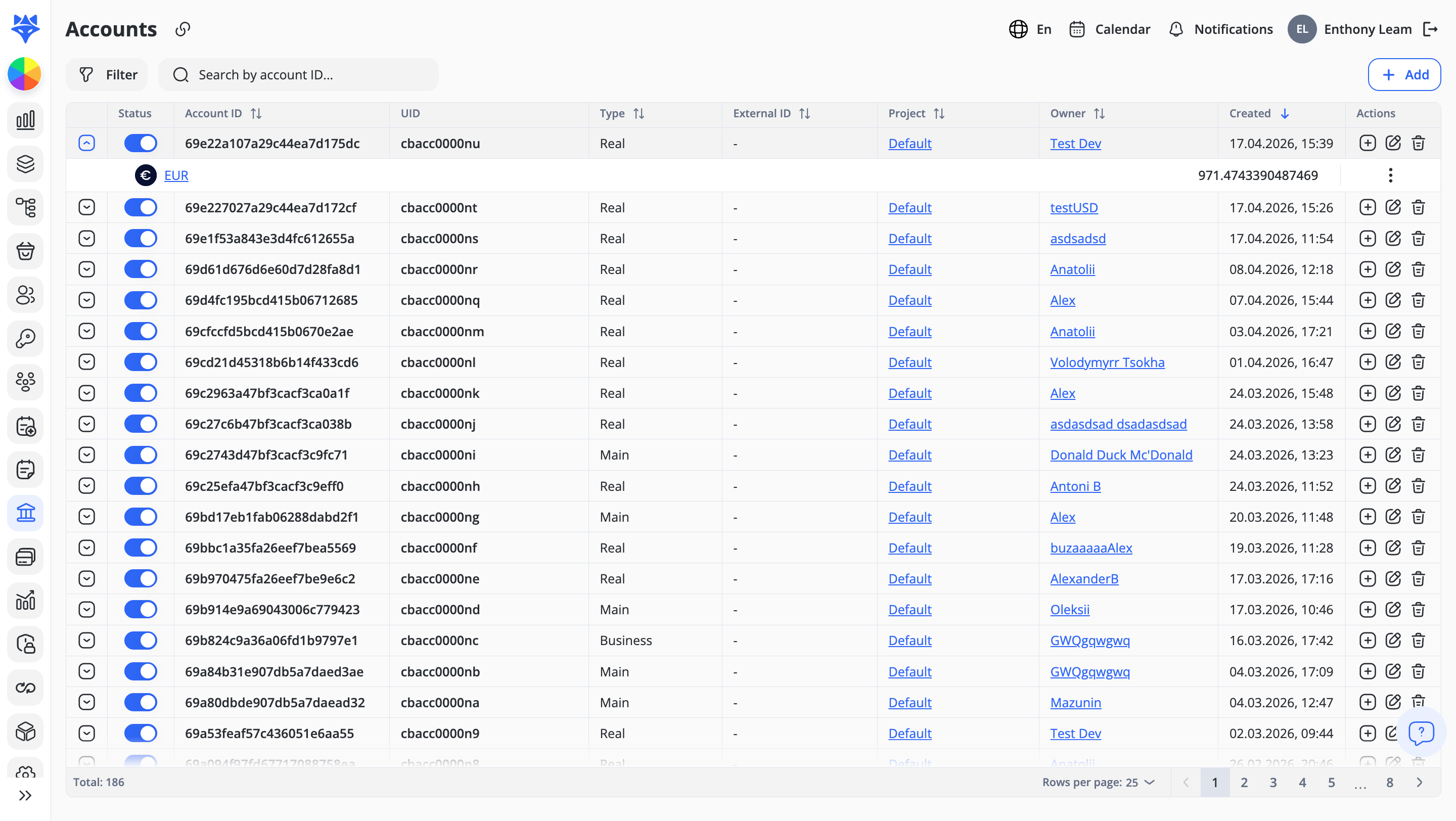
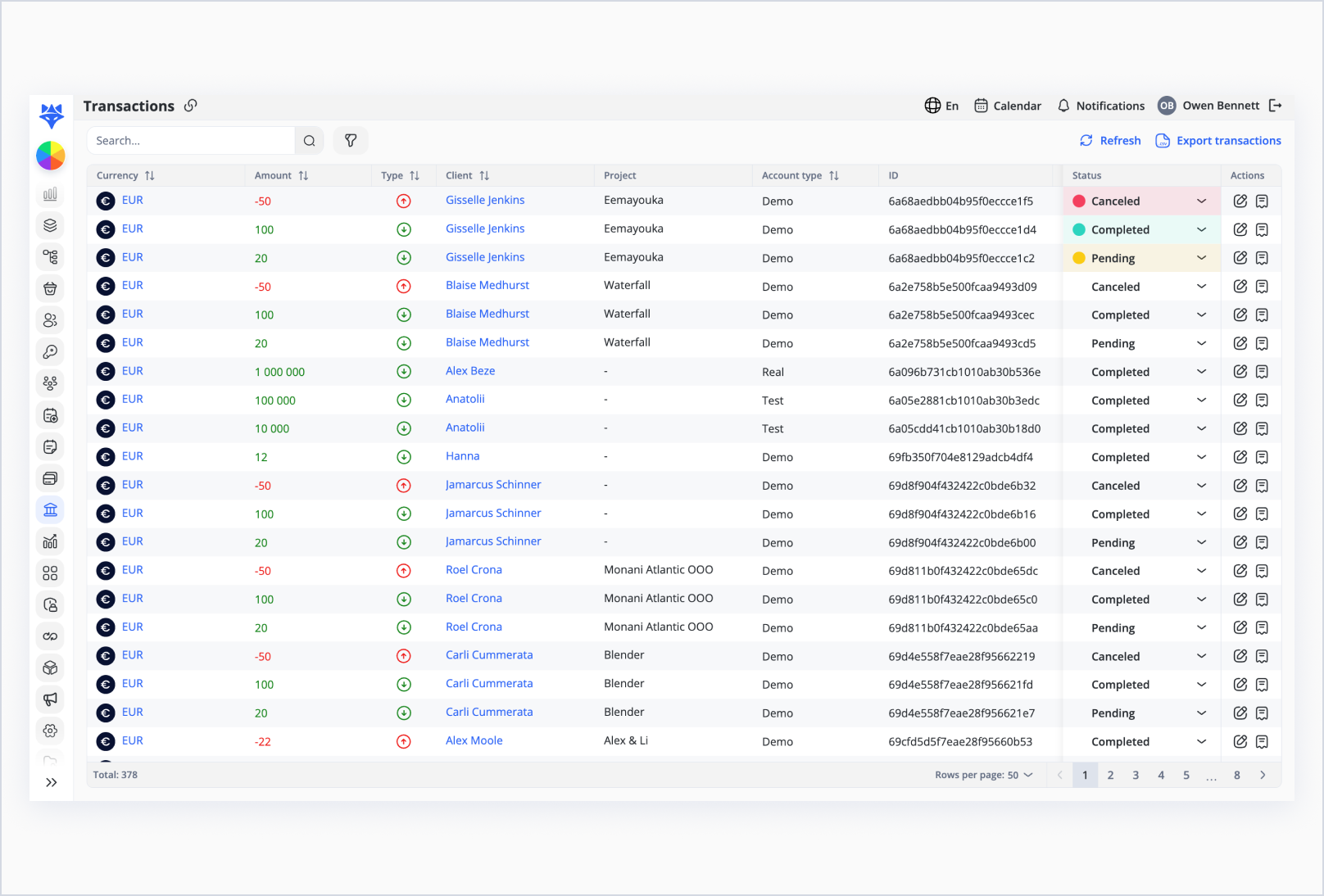
Transaction processing. Every financial action inside the system is validated, recorded, and reflected in the related account. This helps companies track client funds accurately and maintain a clear model of cash flow across their product or system.
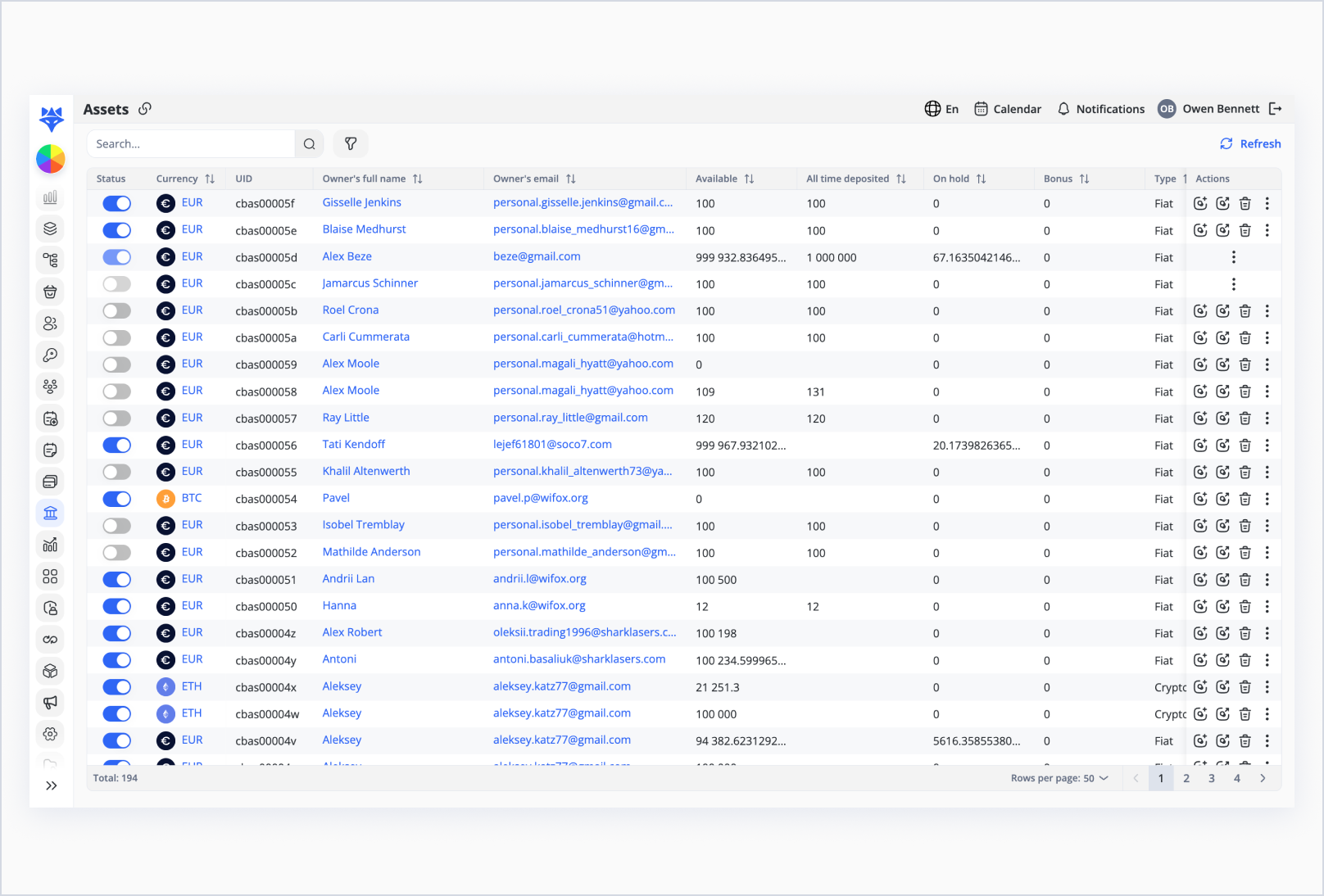
Asset management. Core banking can manage different forms of assets, including fiat currencies, cryptocurrencies, trade-ins, NFTs, and other types assigned to specific accounts.
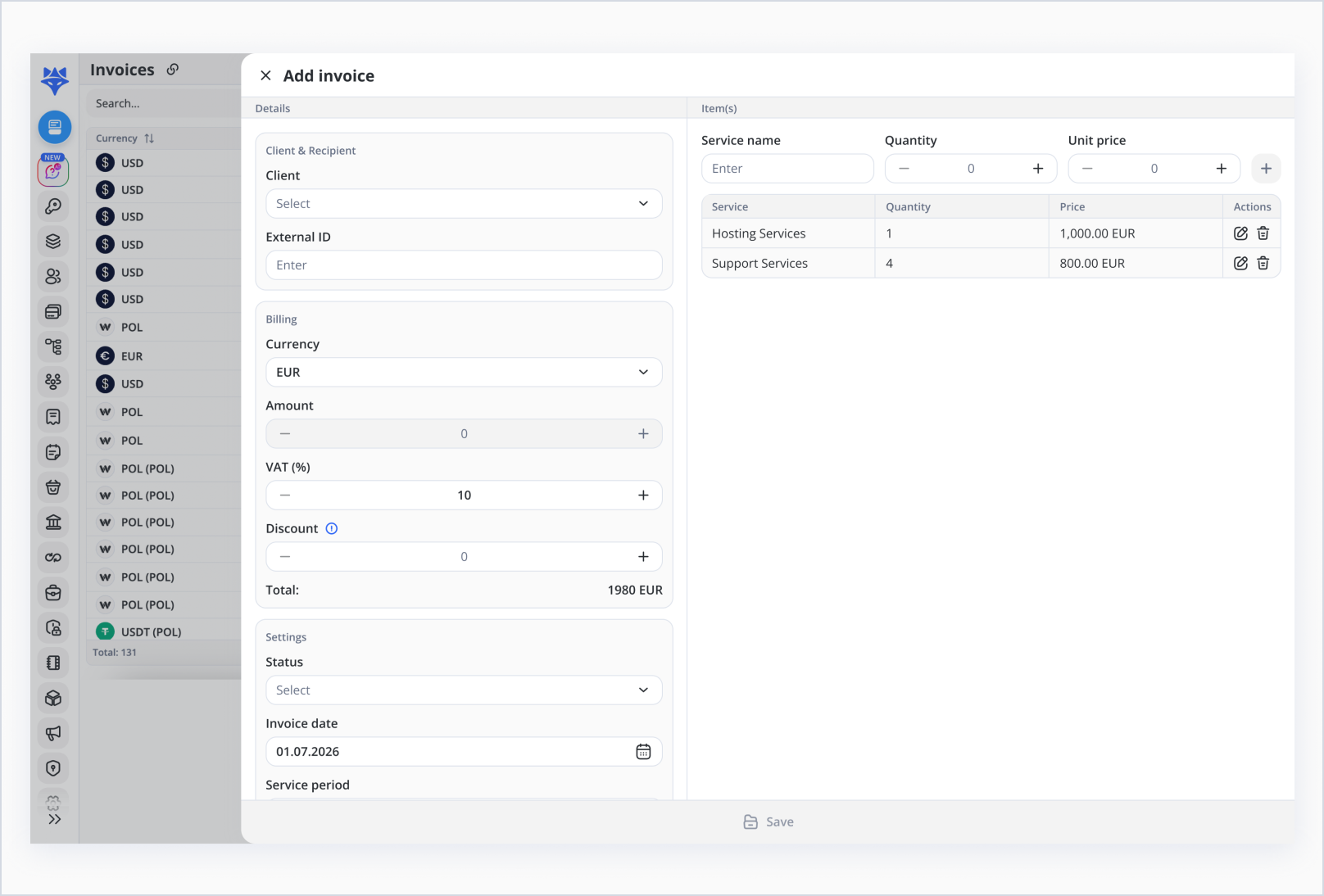
Fee and invoice management. The system is able to apply company fees during transactions, manage fee groups, and support invoice creation, status tracking, related processes, postbacks, and supporting documents.
Payment and card integrations. To ensure smoother financial operations, core banking software can connect with payment systems, banks, and card providers to support manual transactions, card-related processes, and payment flows inside the work environment.
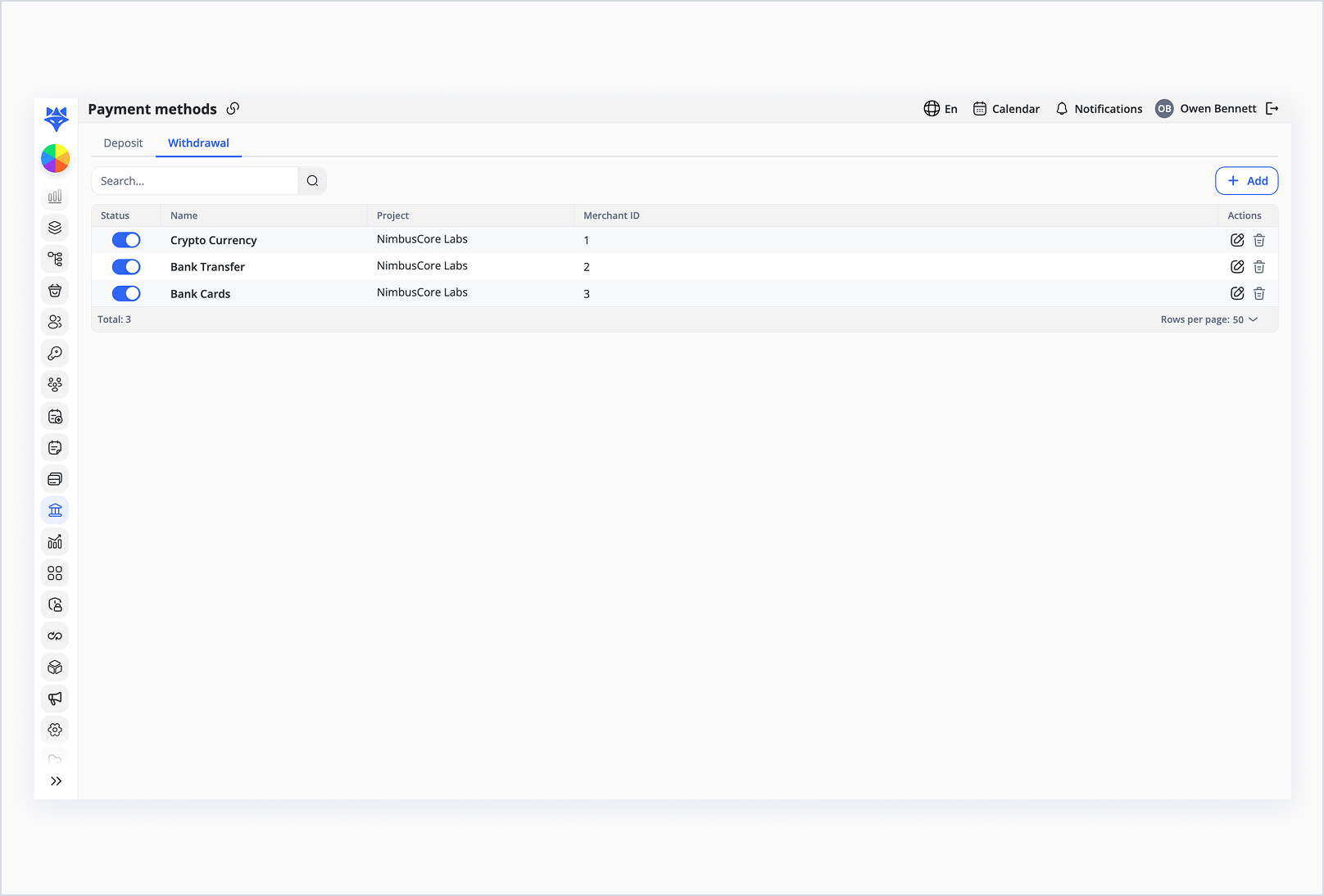
Together, these features turn core banking from a back-office tool into strategic financial infrastructure.
How Core Banking Systems Work
Core banking systems process transactions through a structured flow of validation, execution, recording, and balance updates. When a user initiates an operation, such as a deposit, withdrawal, transfer, card transaction, or another financial action, the request enters the system through a connected interface.
First, the system checks the operation details. It verifies:
-
Account
-
Asset
-
Available balance
-
Payment method
-
Fees
-
Configuration rules
-
Specific requirements
If the operation does not meet the required conditions, it can be rejected, blocked, or sent for review. If the validation is successful, the system continues with transaction processing.
During processing, the system records the operation, updates the related account, applies fees where required, links the transaction to the relevant asset or funding method, and updates financial records. It happens instantly and without human intervention.
Real-time updates are critical for this software because companies need accurate account balances at any moment. Clients expect instant transactions with no delays. Internal teams need current data for support, reporting, reconciliation, compliance, and control over operations.
Core Banking System Architecture
A modern core banking system usually has a modular architecture. This means the platform is divided into separate but connected functional areas. The backend manages financial logic and data processing.
Middleware connects core banking systems with in-house tools and external services. It enables easy data routing between payment providers, banks, client-facing products, reporting tools, partner solutions, and other services.
The frontend is the interface used by teams and clients. It may include admin panels, client cabinets, invoice screens, account pages, and configuration tabs. These interfaces allow users to manage financial operations without direct access to the backend.
Adopting an API-first approach is important for modern financial infrastructure. APIs allow the system to connect with payment gateways, banks, card providers, partner services, accounting tools, reporting services, and fintech products. With a strong integration layer and flexible cloud infrastructure, companies can connect financial operations across multiple systems while keeping the core data centralized and easier to control.
Legacy Core Banking vs Modern Core Platforms
Legacy core banking may become a serious limitation for companies. Older systems are often difficult to adapt when transaction volume grows, new payment flows appear, or business logic becomes more complex. As a result, teams may face several challenges.
One of the biggest issues with legacy cores is data fragmentation. Teams need to spend more time reconciling data, checking records manually, and correcting inconsistencies. When a company plans to add a new funding method or adjust fees, the process can be slow and expensive.
Another issue is limited scalability. Legacy core banking tools and outdated internal systems may struggle with high transaction volume, real-time updates, multi-currency activity, or complex integrations. Manual workarounds can:
-
Cause delays
-
Increase operational risk
-
Create more errors
Maintenance may also cause downtime, especially when systems were not designed for continuous digital operations.
Modern core platforms are built differently. They are modular, API-driven, cloud-native platforms with scalable infrastructure. They allow companies to centralize financial data, manage accounts and assets, track transactions, fine-tune funding methods, apply company fees, create invoices, and integrate with third-party services from one environment.
Modern Core Banking Features
The latest core banking systems include a broad set of financial infrastructure features designed to support digital operations and real-time data control. In Wifox Business Core Solution, these features are organized into practical modules that enable:
-
Account management: The platform helps companies organize balances, client funds, financial records, and transaction history in one structured environment.
-
Asset management: Companies can manage different forms of assets, including fiat currencies, cryptocurrencies, trade-ins, NFTs, and other types.
-
Transaction tracking: The system gives teams a centralized view of all financial activity, making it easier to track money movement.
-
Payment management: Companies can configure how users pay for services, goods, or financial operations through available methods or add new integrations.
-
Bank and card data management: Bank and card details stay organized and connected to financial workflows.
-
Fee configuration: Businesses are allowed to set transaction fees and fee groups to apply charges consistently across financial operations.
-
Invoice management: Companies can create and track billing records, invoice statuses, related transactions, postbacks, and supporting documents.
All sections are fully customizable and support individual settings to fine-tune the system according to your business needs.
Benefits of Modern Core Banking Systems
For fintech companies, brokers, and other businesses that manage financial operations, a modern core banking solution gives stronger control over daily processes.
Automation of routine processes enables real-time data updates, rule-based fee application, invoice status tracking, and funding method connection to client preferences. This reduces manual work and gives teams a manageable operating process.
As the business grows, the system can support more clients, accounts, assets, and transaction volume without losing visibility over financial movement. Stable and seamless access to balances, transaction statuses, and account data also helps teams respond faster when issues appear.
Challenges of Core Banking Systems
Core banking systems offer major advantages, but vendor dependency remains one of the main risks businesses should consider. The provider directly influences system stability, support quality, product updates, integration options, pricing, and future development. That makes vendor selection a strategic business decision, not just a technical choice.
Migration can also be difficult, especially when a company moves from legacy infrastructure. Account data, funding history, fee settings, and invoice records must be checked carefully before you migrate.
Compliance and regulatory requirements are important as well. Companies that handle financial data must maintain proper access control, audit trails, reporting, and data accuracy. If the system is poorly adjusted, it can create reporting gaps, business risk, and compliance issues.
Core Banking Platform Configuration
The adoption of the core banking solution should start with mapping the company’s real financial workflows. Before the system is fine-tuned, the business needs to define:
-
How money moves
-
How accounts are created
-
Which assets are supported
-
How deposits and cash-outs are processed
-
Which funding methods are used
-
How fees are applied
-
Which reports are required for internal control
With Wifox Business Core Solution, companies receive a core financial system configured around their business logic. The setup focuses on preparing the Core Banking module for daily use: defining account types, currencies, transaction subtypes, statuses, company fee settings, and connections to new products. This makes core banking a flexible solution that streamlines operations rather than rigid software restricting how a business works.
How to Choose a Core Banking Solution
When choosing a solution, companies should focus on whether the system can support their current financial operations and remain flexible as the business grows. The system should not force the company to adjust its routine to rigid software logic. Also, pay attention to the following tips:
Prioritize API-first architecture. A strong solution should easily connect with both internal systems and external services, keeping financial data consistent across the entire business environment.
Check the vendor’s SLA. Review the vendor’s uptime commitments, support response times, maintenance procedures, and incident handling process. Since core banking supports critical financial operations, weak support or frequent downtime can affect business performance.
Assess security and built-in compliance. The system should support role-based permissions, access control, user activity logs, funding history, and clear records of all changes to ensure internal control and readiness for audits and compliance checks.
Who Can Benefit from a Core Banking Platform
A core banking solution is useful for any company that needs to manage financial activity and handle money movement across multiple users, accounts, assets, or external systems.
-
Brokerage or trading company: The system helps control client funds, commissions, settlements, and transaction history in one place. This gives teams a clearer view of fund movement and understanding how to support users.
-
EMI or payment provider: The platform creates clearer control over money movement across different channels. It improves reconciliation, makes payment activity easier to trace, and gives teams clearer visibility as transaction volume grows.
-
Digital bank: The system is widely used by digital banks to keep customer account activity consistent and easy to control. Users get faster access to accurate balance and transaction information, while internal teams can manage financial activity without relying on scattered records.
-
Marketplace or e-commerce business: Core banking functionality can support merchant balances, customer transactions, refunds, commissions, payouts, and invoices. This makes money flow between buyers, sellers, and the platform more transparent.
For companies with multi-brand or multi-project operations, the solution can help keep financial activity organized across different business units while maintaining centralized control over accounts, assets, and reporting.
Future of Core Banking Systems
Core banking systems are becoming a foundation for broader financial infrastructure, not just a tool for processing accounts and transactions. The next stage of development will focus on adaptability and smarter operational control.
Another major shift is the move toward embedded finance. Businesses outside traditional finance will continue to add payment flows, client balances, payouts, commissions, invoices, and financial records directly to their platforms. To support this, core banking systems will need to serve as the financial engine behind various digital products.
Cloud-native and API-driven systems will also become more important. They allow companies to launch faster, scale more easily, and connect with a wider financial ecosystem. Open banking, payment innovation, digital assets, and partner integrations will continue to disrupt older financial infrastructure models.
Bottom Line: Why Modern Core Banking Matters
A modern core system is a solution for any company that needs to manage client operations, connections with financial institutions, and compliance in one structured environment.
Legacy systems often slow down cash flow because data is scattered, and many processes still depend on manual work. Modern core banking platforms turn these operations into a connected real-time workflow, where transactions and controls work as part of one system.
Wifox Business Core Solution offers companies a ready Core Banking module that can be configured around their financial needs. If your company needs to manage financial activity with more structure and less manual work, Wifox Business Core Solution gives you the infrastructure to do it.
digitize your
digitize
your
Business
today!
Unlock your potential with our powerful core solution — the foundation your business will grow on for years to come.


